
From pilots to products — the year V2G grew up
Four commercial V2G offers went live in the EU before this V2G conference. The question in Münster was no longer whether V2G works — it was whether the infrastructure and regulation could keep up.

The headline on pv magazine’s post-conference report put it precisely: “Vehicle-to-Grid business models are emerging — but the market breakthrough remains distant.” That honest duality, real progress alongside real distance still to cover, defined two days of debate at the 5th Vehicle-2-Grid Conference in Münster (Germany) on 15–16 April, where more than 100 participants from industry, research, and the energy sector gathered for the most commercially grounded V2G conversation the event has hosted.
Jan Figgener, Senior Visiting Scientist at RWTH Aachen and co-organiser of the conference, opened with a moment of reflection. Five years ago, the industry was still debating when smart charging would arrive. Three years ago, it was asking when V2G would follow. “Today”, Figgener said, “we are already discussing concrete business models.” Es geht spürbar voran — it is noticeably advancing.
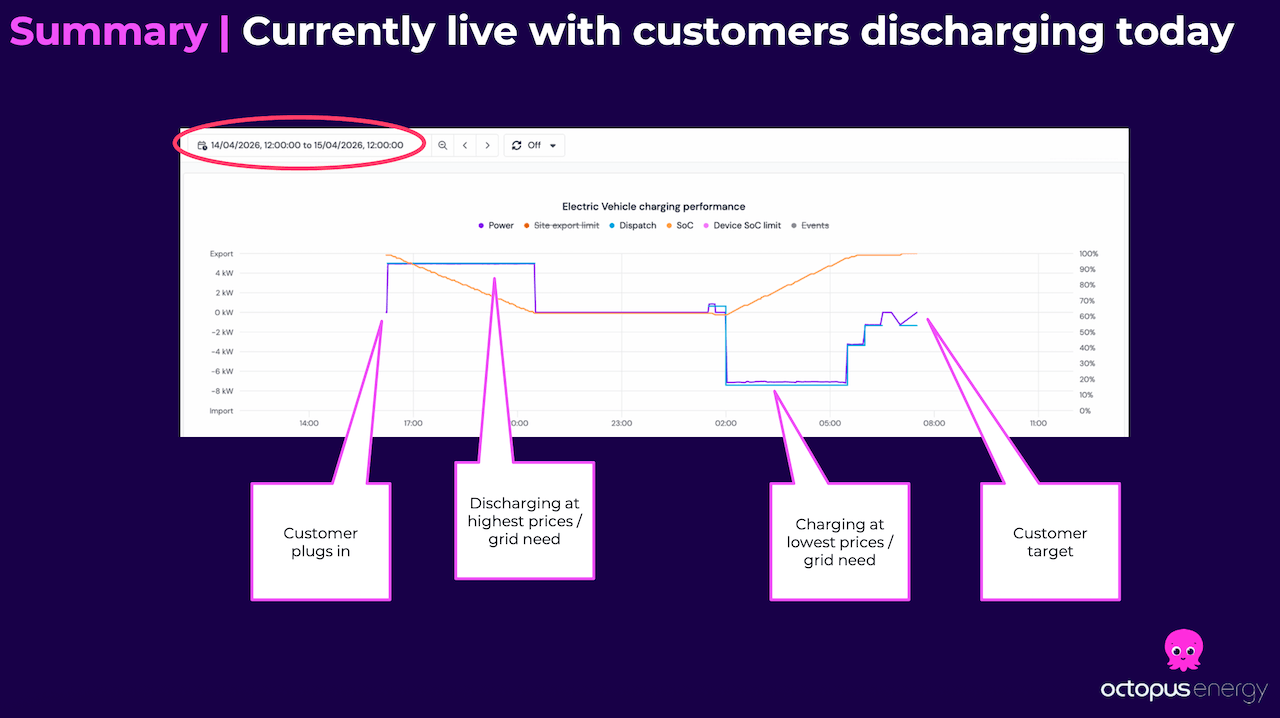
And it is. By day two, Mike Evans from Octopus Energy was on stage showing live customer discharge graphs dated 13–14 April: real vehicles, real customers, real kilowatt-hours flowing back to the grid. The live product is Octopus’s UK bundle (BYD vehicles on Zaptec Go2 chargers). Germany, where the Ford Explorer and Capri will connect to Ambibox DC wallboxes on the Kraken platform, was on the roadmap as the imminent next step. Not a distant announcement. A product already live in one market, with the German launch in the pipeline.
The same tension ran through every session across both days: the products are real; the infrastructure to support them at scale is not yet ready. The gap isn’t just smart meters and harmonised grid codes — major utilities haven’t yet built the billing logic, compliance workflows, and internal processes to operate V2G commercially. Five things from those two days are worth understanding properly:
Why Germany’s headline V2G revenue figure of ~€700/year may differ sharply from what customers are currently receiving, and what the November 2025 double-taxation reform actually changed
Why 250,000 discharge sessions is the current price of entry for a single car OEM to approve a V2G charger, and what that demand says about where ISO 15118-20 standardisation actually stands
What Utrecht Energized’s €60-per-car-per-month result reveals about the difference between grid congestion contracts and frequency balancing markets
Why at least one established DC V2G charger manufacturer has decided not to take DC to the mass market, and what the inverter economics argument rests on
Why the gap between the marketed ~€700/year and the live customer experience isn’t just a communications problem — and what the industry risks if it doesn’t close it
Latest articles:
If you haven’t subscribed yet, here’s what was covered in the past weeks:
How OCPP 2.1 and ISO 15118-20 enable V2G grid code implementations
Grid codes, decoded — The EU rules that are finally coming for EV chargers
The commercial map: where V2G is live today
Europe’s V2G commercial timeline has moved faster than many expected, and the geography tells its own story.
France, October 2024: Mobilize, Renault Group’s energy services sub-brand, partnered with The Mobility House to launch the first commercial V2G service in Europe. Built around the Renault 5 using AC architecture, the service is also available for the Alpine A290. Revenue in France averages €30–40 per month per vehicle, as reported at the conference by Renault’s Alain Thoral.
Netherlands, June 2025: We Drive Solar launched Utrecht Energized, Europe’s first large-scale V2G car-sharing scheme. More than 200 Renault 5 vehicles now operate on 7kW AC bidirectional chargers in Utrecht, generating revenue from wholesale energy arbitrage and, uniquely, contracted grid congestion services. More on this project in a dedicated section below.
United Kingdom, August 2025: Octopus Energy, already the operator of the world’s largest EV virtual power plant with 370,000 vehicles on smart tariffs in Great Britain, launched a V2G programme bundled with BYD. Zaptec brought the Go2, the first commercially available AC V2G charger in the UK, to market at the same time.
Germany, September 2025: BMW and E.ON launched Germany’s first residential V2G offer at IAA Mobility, followed in February 2026 by the full commercial package: iX3, dedicated DC wallbox from Compleo, and energy tariff.
Germany, forthcoming: Mike Evans (Octopus Energy) presented the German PowerDrive V2G tariff at the conference, with Ford Explorer and Capri vehicles connecting through Ambibox DC wallboxes on the Kraken platform. The German launch is the imminent next step following the live UK product.
The day after the conference opened, pv magazine reported that Volkswagen had announced its own V2G product through its energy subsidiary Elli: a DC bidirectional wallbox, launching in Germany in Q4 2026. Volkswagen estimates savings and earnings of €700–900 per year for participating customers, with registration opening in June 2026 and the service expanding across Europe thereafter. The statistic that gives the launch real commercial weight: approximately one million MEB platform vehicles are already on European roads and technically capable of bidirectional charging. They are waiting for the wallbox and the tariff.
Mercedes-Benz, meanwhile, announced its own V2G product through The Mobility House, completing what looks like a German OEM clean sweep in Q1 2026.
One thing worth stating explicitly: Germany’s current residential V2G market is predominantly DC. BMW/E.ON’s initial product, Ford/Octopus, and VW Elli’s forthcoming Q4 2026 offer all use DC architecture, in which the bidirectional inverter sits inside the charger rather than the vehicle. France and the Netherlands have deployed AC. The architecture question is not uniformly settled by geography or OEM strategy. More on this shortly.
The economics: what does €700 a year actually mean?
The number that defined the conference was €700. It came from Dr Axel Sprenger, Managing Director of Uscale, who presented findings from the 2026 Bidi Charging Study: 11,177 respondents across five markets (Germany, UK, France, Netherlands, Sweden), comprising 4,505 BEV (Battery Electric Vehicle) drivers and 6,672 ICE (Internal Combustion Engine) drivers from different EV adopter segments. Sprenger mentioned a minimum revenue threshold of approximately €700 per year — the point on Uscale’s price-sales curve at which roughly 70% of respondents plugged in for 8–16 hours per day said they would participate. Uscale measures adoption likelihood using a Pain-Gain-Index: for a consumer to cross the adoption threshold, perceived benefits must outweigh the new friction V2G introduces by at least 3:1.
The figure is notable for a second reason: €700 is precisely what every major German commercial V2G product targets. BMW/E.ON markets up to €720 per year. VW Elli’s announcement lands at €700–900.
The question the conference addressed more honestly than most public communications do is what customers are actually likely to receive.
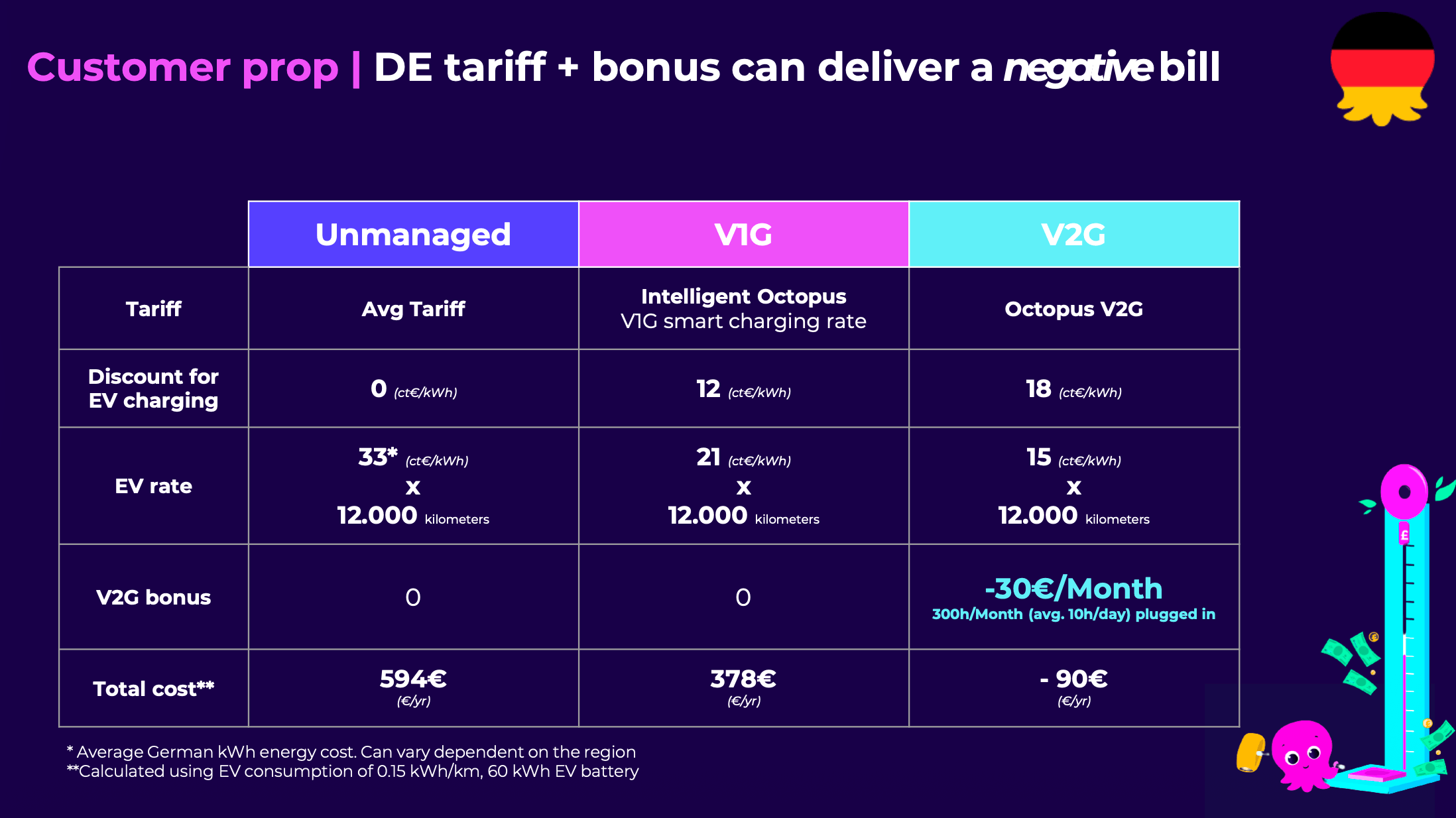
Mike Evans (Octopus Energy) showed a worked calculation for the German tariff. Based on a customer plugged in for approximately 300 hours per month, benefiting from a −€30/month V2G bonus and a discounted EV charging rate of 15 ct/kWh, the net annual electricity cost comes to minus €90. After all charges and credits, that customer is €90 ahead for the year. That suggests a saving of €594 + €90 = €684 per year, roughly in line with the €700 savings per year advertised across the board.
For further context: one of Germany’s four major utilities, in a private conversation shared with me, assessed the realistic achievable revenue range for most residential V2G customers under current market conditions at €100–200 per year.
The gap between the marketed headline and the maybe more likely outcome has two structural explanations. The first, noted by one of Germany’s major utilities in conversation with me: the business cases underpinning current commercial V2G offers were often modelled on the extreme intraday price volatility of 2023, driven by the energy crisis. Those spreads were not expected to persist, and they have not.
The second explanation comes from Dr Johanna Bronisch of Neon Neue Energieökonomik, who presented the pre-reform economics with forensic clarity. In Germany, grid fees, levies, and taxes applied when buying electricity could consume most or all of the arbitrage value available from V2G — leaving little, if anything, to share with consumers. Without sufficient buy-sell spreads, the pre-reform arithmetic simply didn’t work.
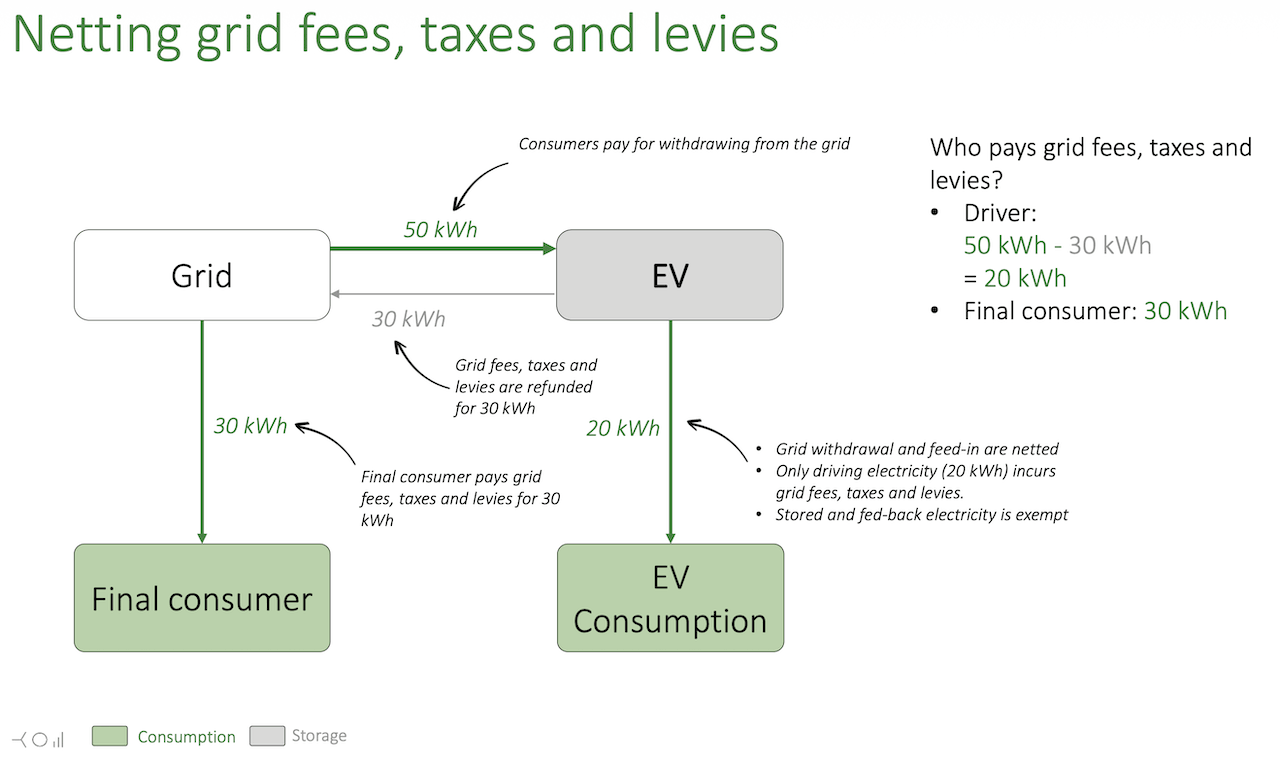
The German Bundestag’s amendment to §118 EnWG (German Energy Act), passed on 14 November 2025, changed this. Bidirectional charge points are now treated like home batteries: round-trip energy is exempt from grid fees and electricity tax for the first time. The arbitrage economics are now real.
But there is a catch in the implementation. The metering rules that define how bidirectional energy flows are measured, colour-coded (grid-sourced versus PV-generated electrons), and billed — collectively known as MiSpeL (Marktintegration von Speichern und Ladepunkten, or Market Integration of Storage and Charge Points) — have not yet been finalised by the Federal Network Agency. MiSpeL ... German regulators have a remarkable talent for turning five words of compound-noun machinery into something that sounds like a mild cough drop.
Until they are, expected in June 2026, grid operators and energy suppliers cannot reliably implement the §118 exemption at scale. And a structural conflict that will not be resolved until at least 2029 remains: the §118 round-trip netting exemption and the §14a EnWG Modul 3 time-of-use grid fee reduction cannot currently be combined. Customers must choose one regime or the other. The AgNes framework initiated by the Federal Network Agency, which redesigns the entire German grid fee system and takes effect on 1 January 2029, is expected to address this through new “grid-serving” (Netzdienlichkeit) provisions.
The honest conclusion: €700 per year is probably achievable, but it requires the right customer (smart meter already installed, compatible vehicle, willingness to leave the car plugged in regularly and for long hours), the right market conditions, and the right offer. Under current conditions, it is the top end of a realistic range, not the baseline.
Three things still standing in the way
There was no shortage of commercial momentum at the conference. But the most useful sessions were the ones that refused to paper over the structural obstacles. Three blockers emerged clearly.
Smart meters: Germany at 5% when 90% is needed
Tina Hadler, SVP Sales & Partnerships at metrify, delivered the conference’s most uncomfortable statistic. Only approximately 5% of German metering points had an intelligent metering system (iMSys) installed by the end of 2025. Germany needs 25–30 million by 2032. Without an iMSys, a household cannot participate in dynamic electricity tariffs, V2G billing cannot be settled correctly, and the DSO cannot legally send control signals to the charger under §14a EnWG.
metrify is, according to Hadler’s presentation, Germany’s largest competitive smart meter operator, and a subsidiary of the solar company Enpal. With more than 140,000 iMSys installed and a rollout pace of around 2,500 per month, it is among the most active players in the market. And 2,500 per month against a target of 25–30 million by 2032 requires a very optimistic reading of what lies ahead.
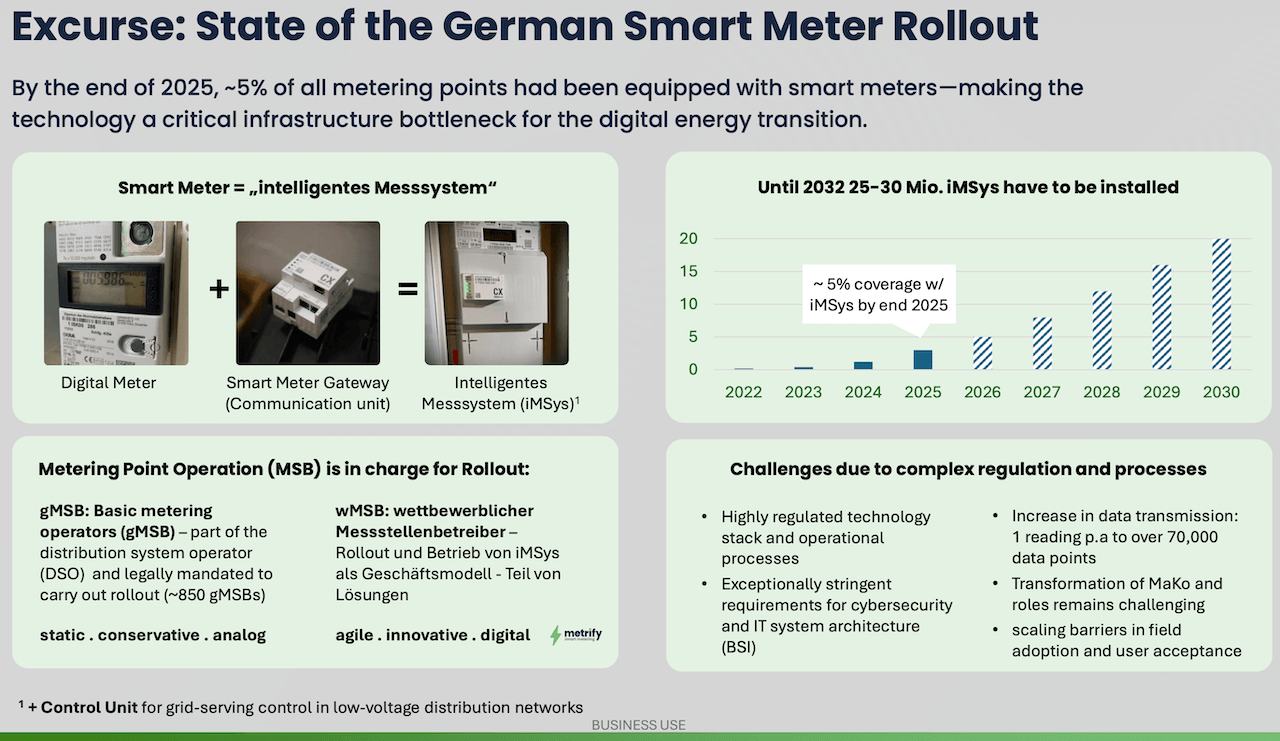
The reasons run deep. Germany’s Federal Office for Information Security (BSI) specified an architecture that is unique in the world: a dedicated hardware security module — the Smart Meter Gateway (SMGW) — that encrypts all communications between the meter, grid operators, energy suppliers, and in-home devices at what the BSI describes as “intelligence service level”. No other country has built anything comparable. The certification requirements were so exacting that manufacturers spent years in disputes. The result is genuinely world-class cybersecurity for critical energy infrastructure. Whether that security premium was worth a decade of delay is a question the energy transition is now forcing into the open — the Netherlands deployed simpler meters first and addressed privacy concerns through iterative regulatory amendments.
The contrast with the Netherlands, where We Drive Solar operates Utrecht Energized on a grid with 90% smart meter penetration, is stark. The conditions that make Utrecht work, including granular metering data, real-time pricing signals, and DSO visibility of bidirectional flows, will take years to replicate in Germany. That contrast is not a reason to despair about the German trajectory; it is a reason to be realistic about the timeline.
The regulatory implementation lag
The legal architecture is largely in place. The execution is still catching up.
Grid operators have 9–12 months from the November 2025 amendment to update their IT systems, putting the window for practical implementation between August and November 2026. MiSpeL finalisation is expected in the coming weeks. The ToU-versus-netting conflict remains until AgNes takes effect on 1 January 2029. Three separate implementation horizons, none of which the industry can accelerate.
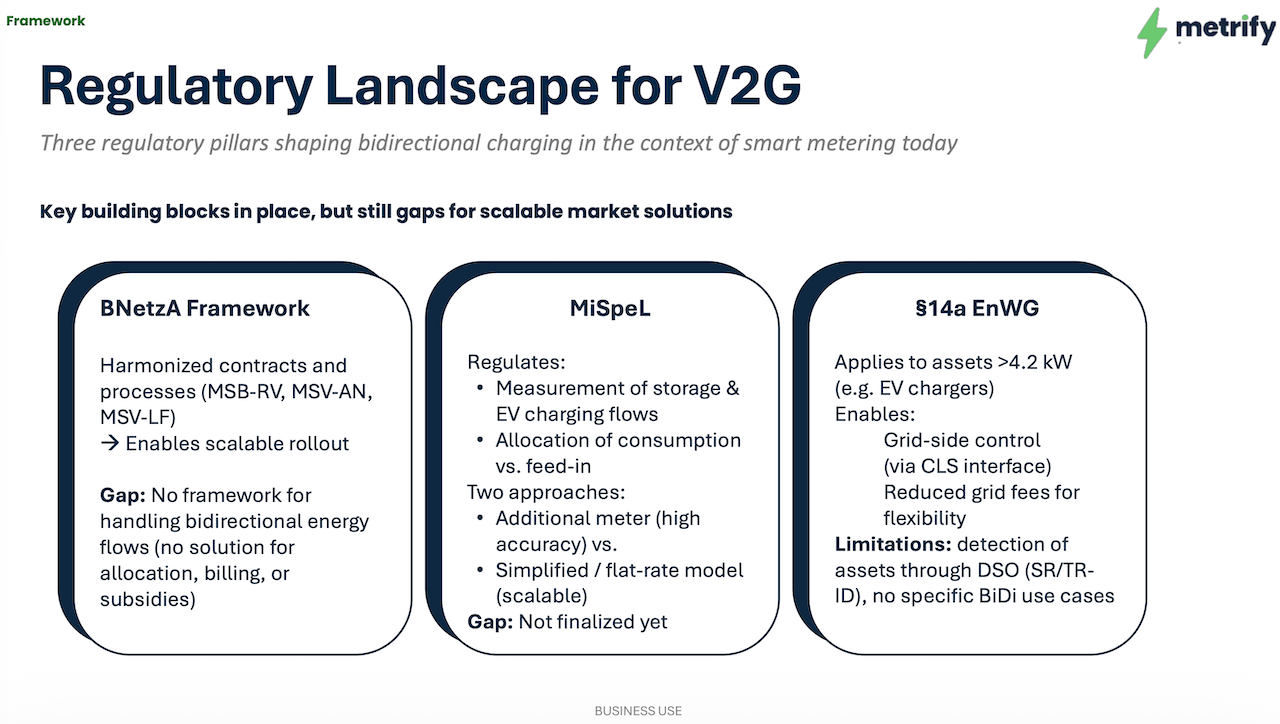
One development from the conference sidelines worth noting: a possible evolution in VDE 4105’s (German grid code) certification approach was verbally discussed, moving from system-level certification (each vehicle + cable + wallbox combination certified as a unit) towards unit-level certification (each V2G device certified independently). If adopted, unit-level certification would significantly ease AC V2G scalability in Germany, since a unit-certified wallbox could work with any unit-certified vehicle without requiring pairwise approval. The detail has not yet been officially confirmed. If it materialises before end of 2026, it would be a meaningful unlock for the residential AC market.
Interoperability: a language with many dialects
ISO 15118-20, the communication protocol between EV and charger that underpins V2G sessions, is “a language with many dialects”, as pv magazine put it adequately. The phrase circulated widely at the conference itself: different manufacturers implement the same standard differently, producing systems that are individually conformant but mutually incompatible.
The most concrete illustration of what this costs in practice came from the conference floor: one wallbox manufacturer completed 250,000 discharge sessions with a single car manufacturer before that OEM would approve them as a V2G hardware partner. That arithmetic applies per OEM, per charger brand, per country. It is not a criticism of any individual player; it is the state of the art. As one presenter put it plainly: “V2G is not standardised yet.”
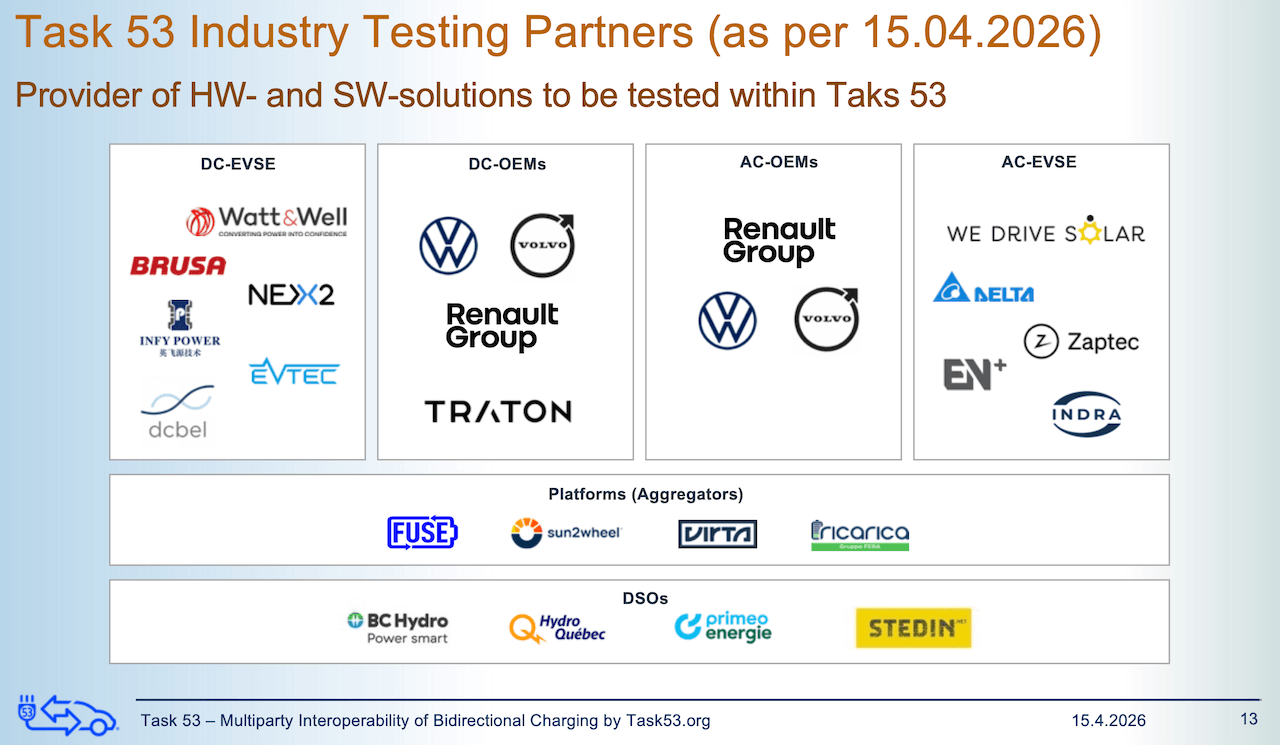
The industry’s main instrument for narrowing this interpretation space is IEA EV-TCP Task 53, formally known as INBID — Interoperability of Bidirectional Charging for AC, DC, and wireless. Marco Piffaretti, its Operating Agent since May 2024 and a figure with 39 years in eMobility, presented the project’s progress at the conference. Task 53 is now supported by 18 countries and the European Commission, proposed originally by Switzerland. What distinguishes it from existing industry interoperability work — notably CharIN’s bilateral testing events — is scope. CharIN tests pair one EV with one EVSE; the results are private. Task 53 targets something more demanding: three EV manufacturers, three EVSE (charger) manufacturers, and five DSOs (Distribution System Operators, i.e. grid operators) all interoperating at once, with results shared among all project participants. The Golden Guidelines that Task 53 is developing are not a new standard and not a deviation from ISO 15118-20. They define a mandatory subset of the existing standard — the minimum required implementation for a prioritised set of use cases — specifically to close the space where “fully ISO-conformant but incompatible” implementations currently proliferate.
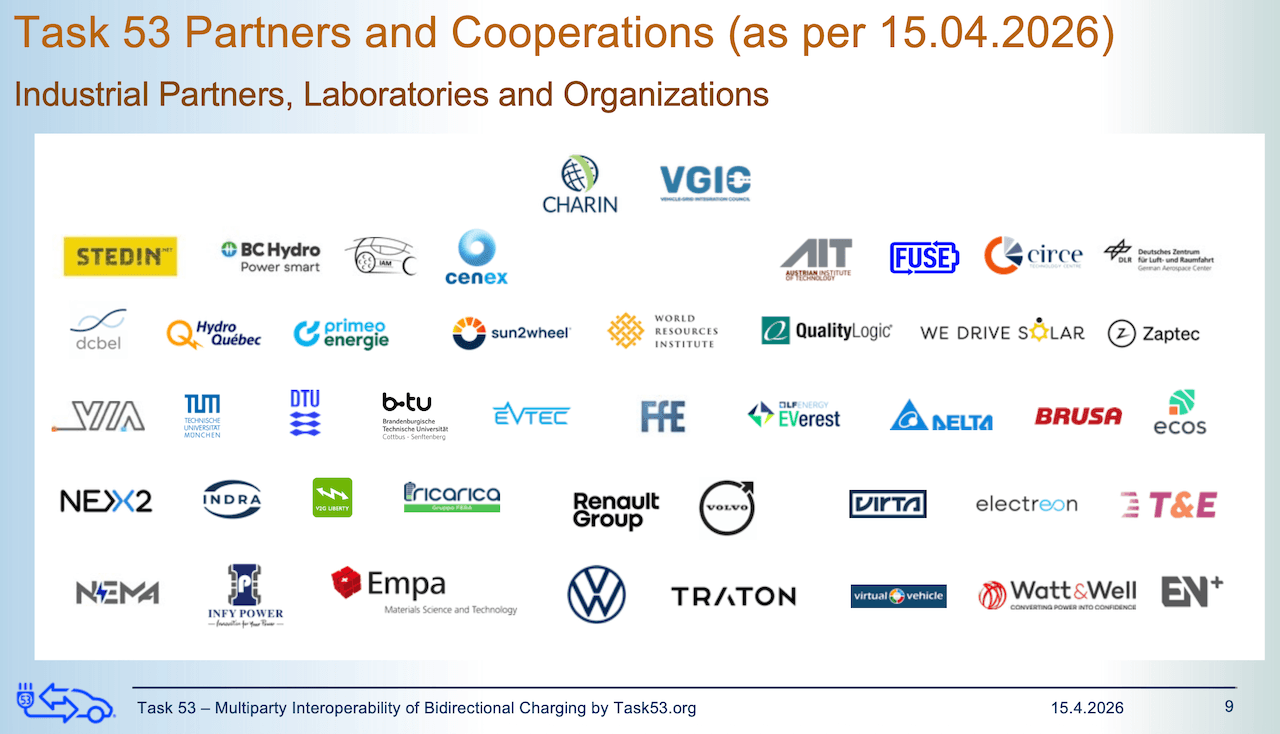
The project runs from 2025 to 2028. At the time of the conference, the initiative was moving from planning into actual multi-party cross-testing — DC results expected by late 2027, AC and the Final Golden Guidelines by late 2028. This is the honest timeline: serious, progressing, but the ISO 15118-20 mandate for charger manufacturers that takes effect on 1 January 2027 arrives well before the results are in.
AC or DC? Why the architecture question matters for cost
The AC versus DC debate that occupied earlier V2G conferences has not been settled uniformly. But the direction of travel is becoming clear.
In DC V2G, the bidirectional inverter lives inside the charging station. The vehicle contributes its battery; the charger handles the DC-to-AC conversion and connects to the grid. Grid code compliance is the responsibility of the charger manufacturer. Any compatible vehicle can, in principle, connect to a certified DC V2G charger. The pairing constraint is looser. The cost implication runs the other way: that inverter is significant hardware, and charger manufacturers build it in volumes measured in tens of thousands, not millions.
In AC V2G, the inverter is the vehicle’s own on-board charger (OBC). The wallbox becomes, in principle, a smart socket with communication capability: substantially cheaper hardware. The challenge shifts to certification. Grid code compliance now also belongs to the vehicle, and each specific vehicle–charger pairing must be certified separately as a grid-compliant unit. This is the paired certification constraint that currently limits AC V2G roaming. A Renault 5 approved for V2G with a LomboxNet charger is not automatically compliant when connected to a different wallbox brand.
The EU’s RfG (Requirements for Generators) 2.0 technical annex — discussed in my previous article — is expected in October 2026 and should define harmonised AC V2G grid compliance requirements that would eventually allow type-approval-level certification to decouple the EV from the specific EVSE, opening up the kind of roaming that makes a large AC V2G market viable. Until then, every AC deployment requires pairwise certification work.
Germany’s residential market in 2026 is predominantly DC: BMW/E.ON’s initial iX3 offer with a Compleo wallbox, Ford/Octopus via an Ambibox wallbox, and VW Elli’s Q4 2026 product all use DC architecture. AC is commercially live in France (Renault 5 and A290 via Mobilize), the Netherlands (Utrecht Energized), and the UK (Octopus/BYD, Zaptec Go2).
The most significant signal on the long-term direction came not from the presentations but from the conversations during the conference. At least one established charger manufacturer present at Münster — one that has already delivered DC V2G hardware commercially — has decided not to take DC V2G to the mass market. The reasoning is structural: vehicle manufacturers build inverters at automotive scale, amortising the unit cost across millions of vehicles. Those economics are orders of magnitude better than anything a charger company can achieve in dedicated wallbox volumes. When the inverter moves into the EV, it gets cheaper with every additional vehicle sold. The wallbox cost drops dramatically as a result. That is the mass-market AC proposition: cheaper hardware, powered by scale that no charger OEM can match.
The short-run picture is mixed between architectures. The long-run cost structure points clearly towards AC, at least in the residential space. For fleets, with heavy-duty vehicles carrying big batteries, a DC V2G charger with higher power throughput may still make more sense.
Utrecht Energized — what scaled V2G actually looks like
Everything discussed above (economics, architecture, bottlenecks) is easier to evaluate against a project where V2G is not a concept but an operating service.
Robin Berg, founder and CEO of We Drive Solar, presented eight-month results from Utrecht Energized at the conference. Launched in June 2025, the project places bidirectional Renault 5 vehicles into the Utrecht car-sharing fleet and operates them as grid assets in real time.
The current facts: 220 Renault 5 E-tech Electric vehicles on dedicated 7kW AC V2G charge posts operated by LomboxNet in Utrecht, with a target of 500 vehicles by end of 2026 (expanding to include Renault 4, Megane, Scenic, and Twingo). The technical architecture runs entirely on open standards: ISO 15118-20 (tested at Renault’s headquarters) and OCPP 2.1.
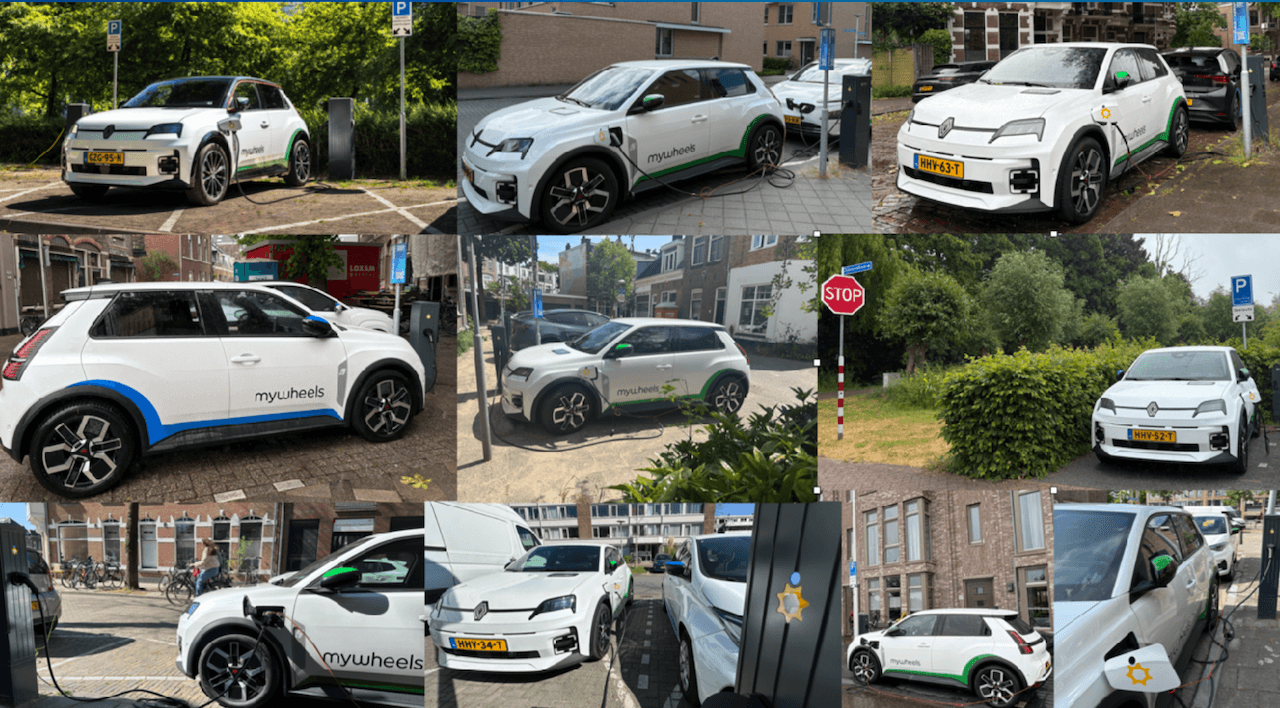
Over the first eight months of operation with a growing fleet of now 220 vehicles: 100,000 kWh discharged in total, approximately 2,000 kWh per car over 200 hours of V2G operation per vehicle. At the conference, Robin Berg stated verbally that the project generates approximately €60 per month per car in V2G revenues. This accrues to We Drive Solar as fleet operator, not to individual car-share users, who access the vehicles on a booking basis through MyWheels, the Netherlands’ largest car-sharing provider.
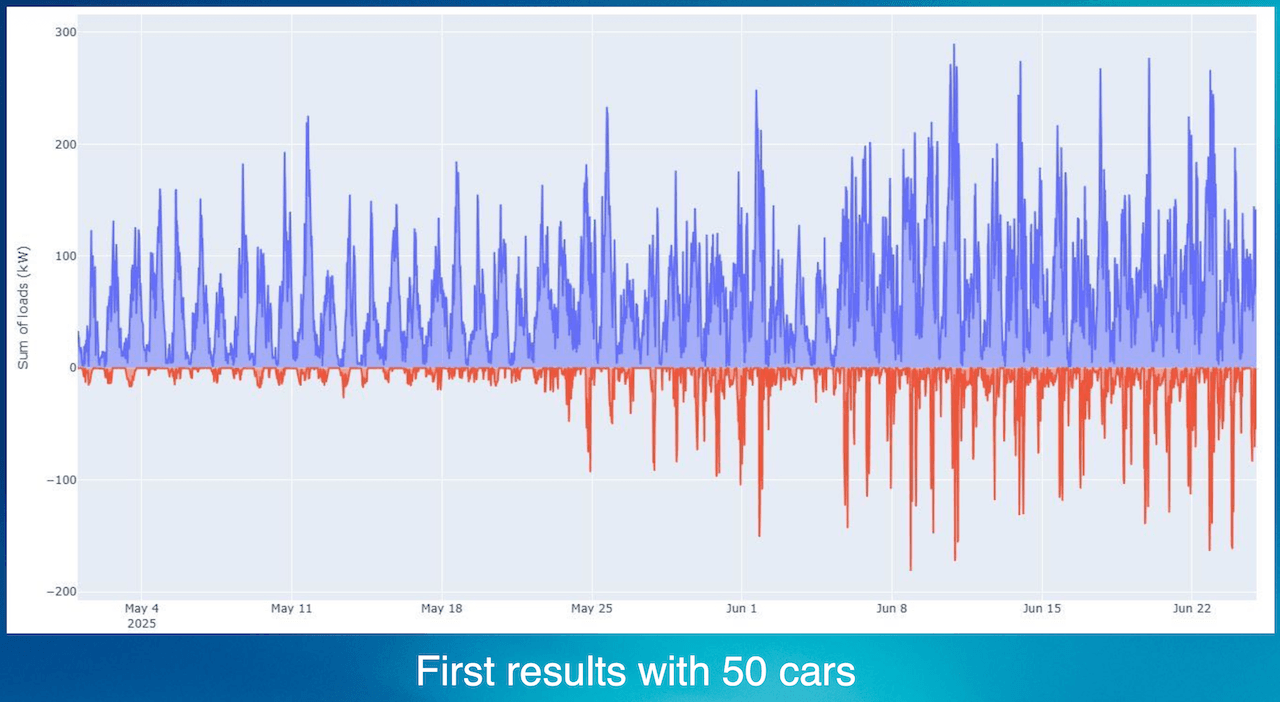
A University of Edinburgh research paper published in April 2026, drawing on interviews with We Drive Solar, Stedin (Dutch grid operator), the Municipality of Utrecht, and ELAAD, reports that the hourly electricity cost from EPEX Spot day-ahead prices serves as a proxy for grid congestion, with the two aligning approximately 95% of the time. This allows the project to optimise for both commercial arbitrage and grid congestion relief simultaneously, without needing separate congestion forecasting infrastructure.
Berg made a point at the conference that deserves more prominence than it received. We Drive Solar has signed the first V2G grid congestion services contract in the Netherlands, with Stedin (the local DSO). His assessment was unambiguous: grid congestion services are a better V2G revenue stream than aFRR (the automatic frequency restoration reserve market used for grid balancing). The reason is reliability. Congestion contracts are structured and predictable: you know when the grid is under stress, you know what volume is expected, and you can plan dispatch around driver bookings. The aFRR market, by contrast, requires short-notice response that complicates fleet scheduling. For a car-sharing operator, predictability wins over intermittent high-value calls.
Stedin’s own calculus sharpens the point further. The DSO calculates that for each EV charging station that is “off” during the evening peak, one additional home can be connected to the network. The Netherlands currently has 10,000 large users on grid connection waiting lists. Robin Berg’s view: with 10,000–20,000 bidirectional EVs and sufficient bidi chargers positioned in the right locations, the Dutch grid congestion problem is solvable. Companies blocked from grid connections can unlock capacity by committing to flexible V2G assets. That is a DSO willing to pay for exactly what We Drive Solar can provide.
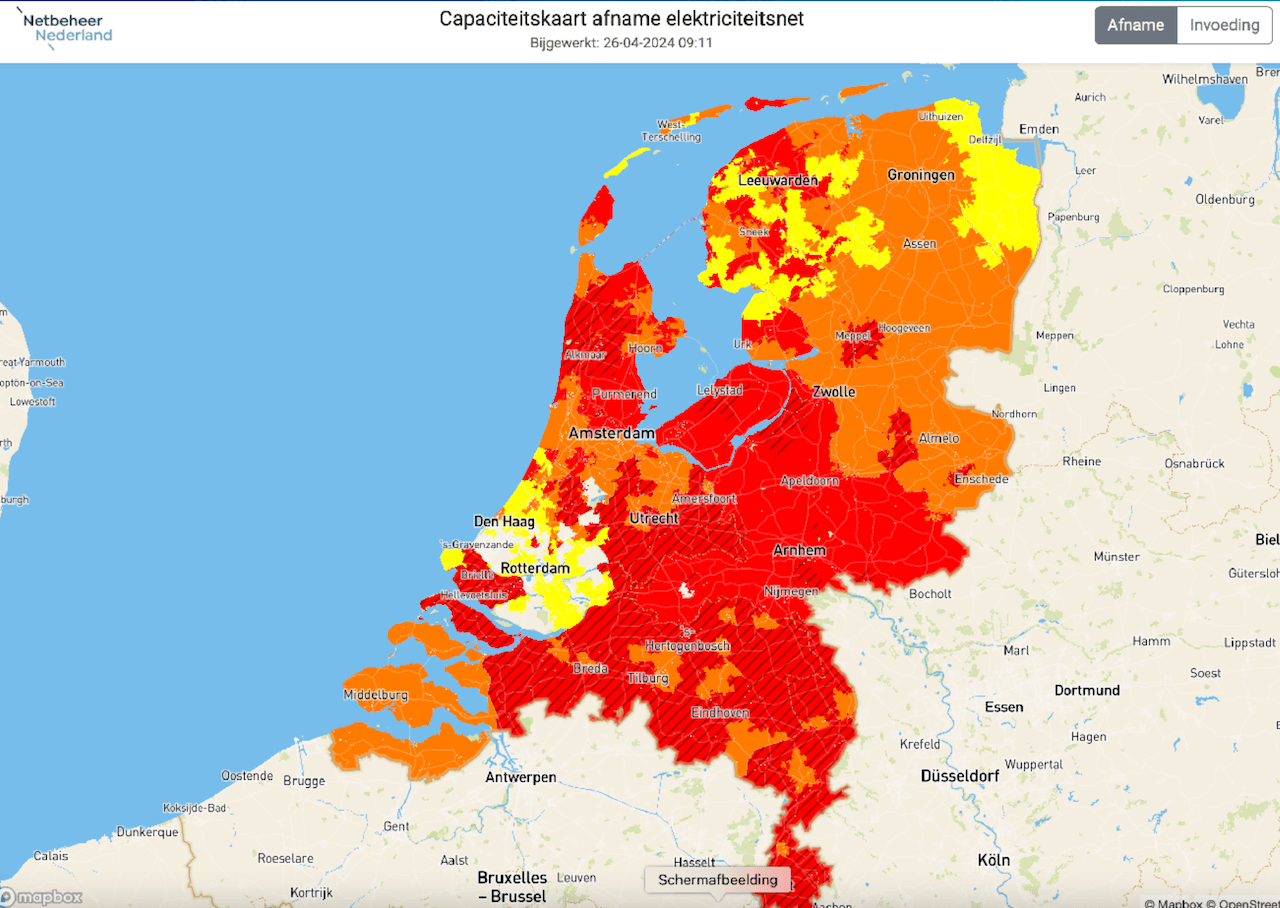
We Drive Solar is scaling the model to Eindhoven, Rotterdam, and Amsterdam, and is beginning expansion into France. Its Solar Life home wallbox, winner of the NL Laadinfra Award 2025, signals ambition beyond the fleet segment.
Why Utrecht works — and why it may not transfer directly
The University of Edinburgh authors draw a conclusion that is probably the most transferable lesson from Utrecht: near-term viable V2G business models require bundled propositions: vehicle, charger, tariff, and fleet operator integrated into a single product. The vision of “any car, any charger, any tariff” remains a second-generation story.
Utrecht’s success rests on a specific set of enabling conditions. The Netherlands has 90% smart meter penetration (versus Germany’s 5%). The Dutch Energy Act, effective January 2026, requires all electricity suppliers to offer dynamic tariffs, giving We Drive Solar the pricing signals it needs. Stedin, as a publicly owned DSO, has a direct mandate to support grid innovation and has invested €8 billion in network expansion since 2023. The Municipality of Utrecht has mapped grid constraints at neighbourhood level and inserted V2G capability requirements into its EV charging procurement. ELAAD, the publicly funded testing body, provides free OEM certification services that would cost private operators significantly more to replicate.
None of these conditions assembled themselves. They were built over years by what the Edinburgh authors call “determined disruptors”: a small group of motivated actors in both public and private roles who were willing to navigate regulatory and technical barriers and who had access to decision-makers throughout.
The template exists. Replicating it requires the underlying infrastructure to catch up. And determined, pragmatic disruptors willing to go the extra mile to turn the V2G dream into reality.
The milestones that matter
From the conference discussions, a credible timeline of what must happen before Germany’s V2G mass market can function:
June 2026: MiSpeL finalised — the metering and billing rules for bidirectional energy flows that unlock §118 EnWG (German Energy Act) implementation at scale. The single most important near-term regulatory event for German commercial V2G.
August–November 2026: Grid operators complete the IT system updates required following the November 2025 amendment. The §118 round-trip tax and levies exemption begins to take practical effect in energy billing.
Q4 2026: Volkswagen Elli launches in Germany. Approximately one million MEB platform vehicles (already on European roads, already technically capable of bidirectional charging) gain access to a commercial offer.
October 2026: RfG 2.0 technical annex published — the EU-level harmonised AC V2G grid compliance requirements that should, eventually, reduce the paired certification burden and open up roaming for AC V2G across member states.
January 2027: AFIR mandate — all new public chargers installed in the EU must support ISO 15118-20. The communication standard that underpins V2G is (hopefully) embedded into millions of new chargers from this date.
2028–2029: AgNes takes effect on 1 January 2029, expected to address the structural conflict between §118 round-trip netting and §14a Modul 3 of EnWG time-of-use grid fees. This is when the incentive architecture for residential V2G becomes coherent enough to model reliably.
One question the conference pointedly left unresolved: data ownership. Vehicle manufacturers want direct access to vehicle data and the customer relationship. Wallbox manufacturers see themselves as the natural interface between the consumer and the energy market. Energy companies see the customer as theirs. All three positions reflect legitimate commercial interests, and the distribution of value in a V2G ecosystem is a direct function of who controls the customer touchpoint. Regulation will not resolve this quickly. Commercial negotiation will, over time, find its own equilibrium. The process will be visible in every product launch and partnership announcement between now and 2030.
The bottom line
The 5th Vehicle-2-Grid Conference in Münster marked a genuine crossing point. The industry has moved from pilots to products, and from “when will V2G arrive?” to “how quickly can the infrastructure and compliance regulation catch up?” Utrecht Energized answers the technical question: AC V2G at fleet scale works commercially, today, using available hardware and open protocols. Octopus’s live customer bill answers the economic question: the revenues are real, if smaller than the marketing suggests.
Three structural bottlenecks remain. Germany’s smart meter penetration is at 5% when the market needs Dutch-level coverage. The regulatory framework is sound but incomplete, with MiSpeL, grid operator IT updates, and AgNes spread across 2026–2029. ISO 15118-20 is the right protocol but still a language with too many dialects.
There is a quieter risk that the conference discussed less directly. If V2G revenues settle at €100–200 per year — and the product requires a dedicated V2G-capable charger costing maybe several thousand euros, potentially an OEM fee to unlock bidirectional capability, and a battery warranty conversation — many EV drivers will make a rational alternative choice: optimise for home solar self-consumption instead. A smart energy management system that charges the car from surplus rooftop PV and draws on that stored energy in the evening is a credible, straightforward substitute. No grid-services complexity. No aggregator relationship. No uncertainty about warranty. For any aggregator or energy supplier counting on residential V2G as a significant revenue stream, that substitution is a real competitive threat. The industry’s response cannot be a more persuasive marketing narrative. It needs to be a genuinely simpler product: one that earns revenue without the driver ever having to think about it, and one that is honest about what it actually pays. The gap between the marketed headline number and the live customer experience is not just a communications problem — it is a trust problem, and trust is harder to rebuild than it is to lose.
None of these are permanent obstacles. All of them carry timelines. The private assessment from the people closest to the German market is that the mass-market, meaning real volumes of residential customers earning meaningful V2G revenues, is before 2030, not before 2028. That is not a failure. It is a realistic sequencing of the work that remains to be done.
The next Vehicle-2-Grid conference in Aachen (April 2027) will have more live products to count. If MiSpeL lands on schedule and grid operators deliver their IT updates, it may have materially better economics to report as well.
Enjoyed this deep dive?
Then please share with your professional (social) network
and restack for your readers.